
May 15, 2026 - The pickleball courts will reopen at 7 AM on Saturday, May 16. Thanks to strategic...
Landscape Management
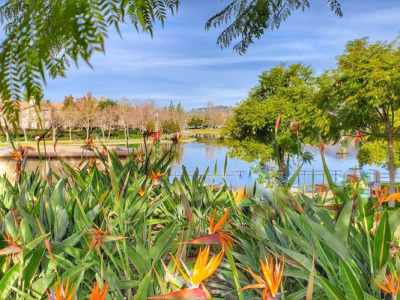
Growing Healthy Landscapes
With hundreds of acres of parks, trails, greenbelts, and common areas, SAMLARC's landscape is the Corporation's largest asset. Countless families and residents visit SAMLARC’s parks, trails, and fields year-round, and landscape design is part of the community’s distinctive aesthetic. Managing the landscape requires significant investment in professionals, resources, and long-term planning.
Our Vision & Operations
Effective landscape management begins with intentional strategies and tailoring the community’s Best Management Practices. Long-term landscape strategies incorporate water-wise plants, fire-safe vegetation management, and irrigation efficiencies. Routine operations encompass year-round maintenance, seasonal maintenance, and site-specific projects.
SAMLARC's landscape standards align with industry practices, including consultation with certified arborists and specialized landscape vendors. The SAMLARC Landscape and Facilities Enhancement Committee (LFEC) consistently reviews SAMLARC’s landscape contracts to provide an additional layer of oversight. These operations also include the minimal use of various pest and weed control products, all of which are approved by the Orange County Department of Agriculture and applied by County and State-approved, licensed professionals. These products are only used when other methods have been exhausted and are selected from an approved list that is even more stringent than the County’s list. This approach balances effective landscape management and responsible environmental stewardship.
Transparent Communications
At the August 2019 Board Meeting a Vegetation Management Procedure was approved focusing on the Use of Pesticides and Notice of Pesticide Application. In addition, SAMLARC has worked closely with professional landscape service providers to implement communication, education, and landscape practices that help address those concerns.
- Landscape Management Communications
- Approved pesticide use notices posted on SAMLARC.org.
- Dedicated landscape and pest management information page on SAMLARC.org.
- Improved and consistent signage for applications in progress. Although not required by any regulations, staked signs noting the product being used are placed and visible in areas where pedestrians may be present.
Growing Together: SAMLARC Landscape Strategies Evolve
Each year, thousands of families play and connect in SAMLARC’s common areas. The SAMLARC Board of Directors has proudly pioneered a community philosophy that places Members’ quality of life at the center of SAMLARC’s operations. This year, SAMLARC is advancing its landscape strategies to reinforce our current standards for healthy landscape, while setting goals for even safer and more resilient environments. The Board routinely updates its Landscape Best Management Practices (BMPs) and Integrated Pest Management plan (IPM), incorporating tangible improvements to the Association’s landscape operations both historically and moving forward. This process builds on SAMLARC’s commitment to managing the community through responsible stewardship.
Landscape stewardship focused on safety and aesthetics has always been part of SAMLARC’s philosophy. Community members can be proud of SAMLARC’s choice to stop using glyphosate products in 2019. This decision was rooted in a sincere, informed belief that other weed management mechanisms could support a safer community. Other core landscape controls have significantly reduced the potential need for herbicide/plant growth product interventions. These include: choosing a Mediterranean plant palette (which mirrors California’s seasons); season-specific projects to mitigate unhealthy ecosystems; manual/mechanical weed removal; and considerable reduction of turf grass (and associated water usage) in the community. Many of these projects have been completed at little to no cost to the Association thanks to rebate programs. These strategic decisions have made it easier to manage SAMLARC’s landscapes without reliance on chemical interventions. Historically, SAMLARC’s overall approach to landscape has reduced the use of synthetic product interventions to only cases where all other methods have been exhausted, and no other alternatives are available.
SAMLARC has never shied away from implementing large-scale landscape projects that benefit the quality of life and the aesthetics of our community, often well before such practices become required. Notable actions include a turf replacement program that reduced site-specific water needs by 40-60%, decreased fertilizer requirements, and lowered labor costs by approximately $100K per year (2024). Implementing large-scale wildfire defensible space (2021) protected residents from massive fire insurance increases – at no cost to the Association. A state-funded loan (forgiven via achieved conservation goals) paved the way for one of the first and largest centralized irrigation systems in the US (2015). The Green Trees for the Golden State grant funded the installation of 1,100 trees along the streets to reduce carbon load (2006). An active Tree Population Inventory shares a bird’s-eye view of the species and quantities of SAMLARC trees. Green waste such as clippings and branches are sent to specialized facilities to create mulch that returns to the site and promotes healthy soil and slow evaporation. All of these complex operations work in tandem to support achieving SAMLARC’s goals of providing viable landscapes.
This year, as part of the Board’s continued stewardship, SAMLARC is continuing to take the lead in thoughtful landscape operations. The Board and its Landscape and Facilities Enhancement Committee (LFEC) continue to review and update its Best Management Practices (BMPs) along with experts in landscape management to incorporate healthy and efficient plant management, prioritize organic products, and reinforce its commitment to sustaining safe spaces for families to play. As the Board reviews its landscape management practices, SAMLARC members are invited to attend SAMLARC Open Session Board Meetings. After the BMPs have been adopted, SAMLARC will happily share them with interested communities, vendors, and neighboring management teams. Members will continue to be able to access the documents online at SAMLARC.org.
The Board of Directors recognizes that the quality of our landscape stewardship impacts the quality of our residents’ lives and sees this as a key fulfillment of SAMLARC’s comprehensive community vision. Members are welcome to share their thoughts and feedback with SAMLARC, whether at an Open Session Board Meeting, by emailing info@samlarc.org, by calling SAMLARC (949.709.0010), or by mailing a comment to the SAMLARC Business Office (22342A Avenida Empresa, Suite 102A, Rancho Santa Margarita, CA 92688). The Board of Directors expects to continuously review its BMP and IPM documents and welcomes community input. Updates will be posted at SAMLARC.org/landscape
As our broader community looks ahead, SAMLARC proudly leads the way in supporting safe and welcoming parks, fields, and common spaces.
For the most up-to-date information on SAMLARC’s landscape practices, visit SAMLARC.org/landscape.
Latest Project Highlights

SAMLARC prides itself on offering high-quality sports facilities for Members and their families t...
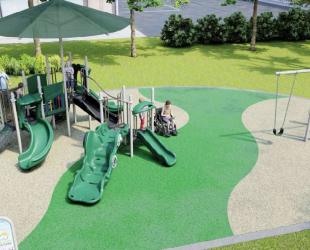
Exciting changes are coming to Los Abanicos Trail! This December, the Board of Directors will bre...
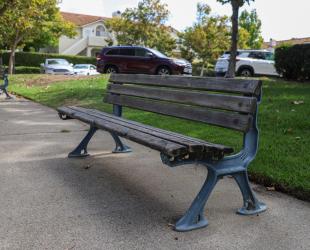
SAMLARC is proud to offer beautiful trails, parks, and stunning views throughout our community. W...
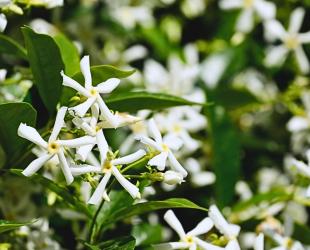
SAMLARC’s blueprint includes 300+ acres of parks, trails, slopes, and greenbelts. However, Califo...
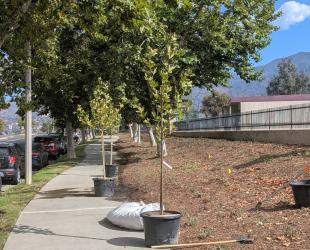
Several turf conversions have been completed across the community, and now that the weather has c...
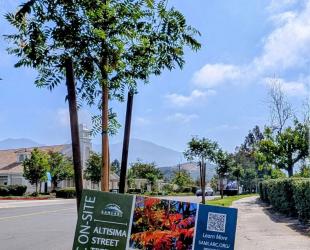
More than 30 Chinese pistache trees were planted at Altisima Park to replace decaying liquidambar...
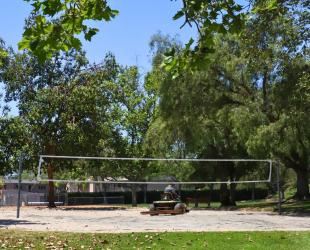
This week, the court sand was topped up and raked to enhance playability and safety. Gear up for ...
Monte Vista and Solana Pools will receive important maintenance and repairs over the month of Mar...
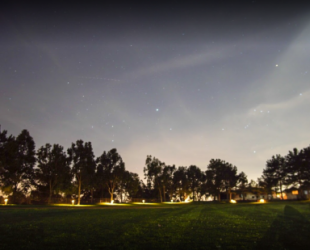
SAMLARC is working to repair the lighting along the walkway in Solana Park that connects the picn...
Loading Projects